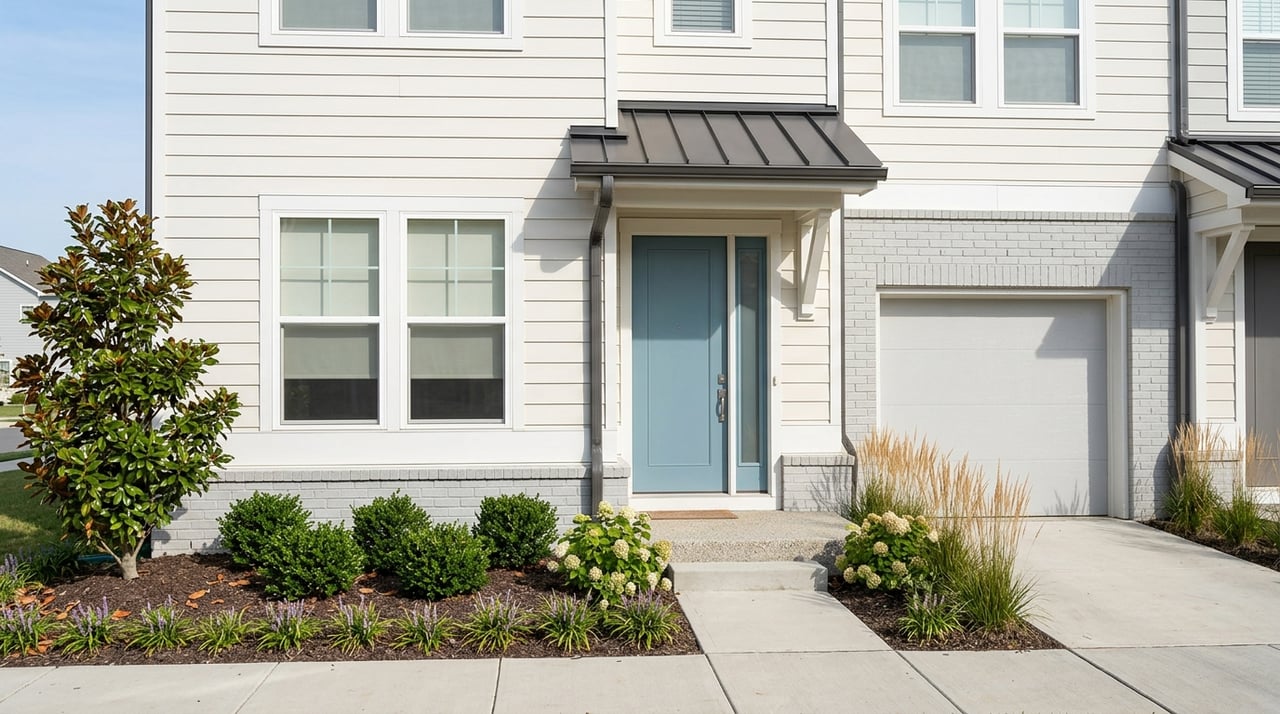
Choosing between a condo, townhome, and house in Chesapeake can feel harder than it sounds. You may know your budget, your timeline, and even your must-have features, but the day-to-day lifestyle behind each option can look very different. The good news is that Chesapeake offers all three, and each one can be a smart fit depending on how you want to live, maintain, and pay for your home. Let’s dive in.
Why this choice matters in Chesapeake
Chesapeake is a large, mostly owner-occupied market, with an estimated 2025 population of 255,332 and an owner-occupied housing rate of 74.4%. The city also has a housing mix that gives you real choices, even though detached homes still lead the market.
According to Chesapeake housing data, about 67.9% of the housing stock is detached, 12.2% is townhouse, and 12.9% is multifamily. That means if you want a traditional house, you will usually see the broadest supply, but condos and townhomes still play an important role for buyers who want lower maintenance or a different price point.
Chesapeake also has many smaller households. City planning materials show that 55% of households are made up of one or two people, which helps explain why attached housing can be a strong match for many buyers.
What a condo means
A condo can be a great option if you want a more simplified ownership experience. In Virginia, condominium law generally separates responsibility between the association and the owner, with the unit owners’ association handling common elements and the individual owner handling the unit itself unless the governing documents say otherwise.
That split is one reason condos often appeal to buyers who want less exterior maintenance. You may spend less time worrying about shared exterior spaces, but you still need to understand exactly what the association covers and what stays on your plate.
Condo lifestyle tradeoffs
Condos often work well if you want a smaller footprint and a more lock-and-leave setup. They can also be a practical entry point for some buyers, especially when compared with larger detached homes.
The tradeoff is that condo ownership usually comes with dues and association rules. You will want to review those carefully so you know how they affect your monthly budget and your day-to-day use of the property.
Condo financing in Chesapeake
Condo financing can be a little more complex than financing some other property types. FHA condo loans may require project approval or single-unit approval, which can affect lender options and timeline.
That does not mean a condo is the wrong choice. It simply means you should ask early questions about financing so there are fewer surprises later in the process.
What a townhome means
A townhome usually sits in the middle ground between a condo and a detached house. The Census Bureau defines a townhouse as a one-unit attached home separated from adjoining homes by walls that extend from the ground to the roof.
Townhomes often give you more room than a condo and may include more than one floor of living space. Some also include small private green spaces, which can be attractive if you want a bit more room without taking on the full scope of detached-home upkeep.
Townhome ownership details matter
With townhomes, the marketing label does not always tell the full story. Ownership can be structured in more than one way, including fee-simple or planned unit development arrangements, so the deed and HOA documents matter more than the name on the listing.
That is especially important when you are trying to figure out who maintains the roof, siding, lawn, driveway, fences, or other exterior items. If low maintenance is one of your top goals, you should verify responsibilities before you assume the HOA handles everything.
Why townhomes appeal to many buyers
Townhomes often fit buyers who want more space than a condo but less exterior work than a detached house. If you want a middle-ground option in Chesapeake, a townhome can check a lot of boxes.
This can be especially useful if you are buying your first home, relocating on a tighter timeline, or trying to balance comfort with manageable upkeep. You may get a more flexible layout while still keeping some shared maintenance responsibilities with the association.
What a detached house means
A detached house is a one-unit home with open space on all four sides. In Chesapeake, this is still the dominant housing type, so buyers searching for a traditional suburban home will usually find the widest selection in this category.
Detached homes often appeal to buyers who want more privacy, more yard space, more storage, and more control over how they use and maintain the property. If those priorities rank high for you, this option may feel like the best long-term fit.
The tradeoff with houses
More space and flexibility usually come with more responsibility. In many detached homes, you are responsible for the full range of upkeep, from the roof and siding to the lawn and exterior repairs.
Some detached neighborhoods do have HOAs, so you should still check each address individually. Even without an HOA, though, the owner typically carries the broadest maintenance load and the broadest range of ownership costs.
Compare the three options
| Property Type | Best For | Maintenance Burden | Monthly Cost Notes |
|---|---|---|---|
| Condo | Buyers who want low exterior maintenance and a smaller footprint | Usually lowest exterior burden, but depends on documents | Mortgage, taxes, insurance for the unit, plus condo dues |
| Townhome | Buyers who want more space with moderate maintenance | Often in the middle | Mortgage, taxes, insurance, possible HOA dues, and shared-cost items depending on ownership structure |
| Detached House | Buyers who want privacy, yard space, and control | Usually highest | Mortgage, taxes, insurance, utilities, maintenance, and possible HOA dues |
What your monthly payment includes
One of the biggest mistakes buyers make is comparing properties based only on price. Your real monthly cost in Chesapeake can include much more than principal and interest.
A full housing budget may include property taxes, homeowners insurance, flood insurance if applicable, utilities, maintenance, and any HOA or condo dues. That means a lower-priced home is not always the lower-cost home month to month.
Chesapeake-specific costs to watch
Chesapeake’s FY 2025-2026 real estate tax rate is $1.01 per $100 of assessed value. The city also assesses a stormwater fee on every property with improvements.
Those local costs matter whether you buy a condo, townhome, or house. They should be part of your budget conversation early, not added as an afterthought.
How dues can change the picture
HOA and condo fees are usually separate from the mortgage payment and can range from a few hundred dollars a month to more than $1,000. Depending on the community, those dues may cover shared-area maintenance, lawn care, trash removal, pest control, or certain amenities.
That is why it is so important to compare homes based on total monthly cost, not just list price. A property that looks affordable at first glance may feel very different once dues are added in.
Who handles the roof and lawn?
This is one of the most important questions to ask before you buy. The answer can vary by property type, and in some cases, by the specific community or ownership structure.
For condos, the association often handles common elements, while you handle the interior of your unit unless the governing documents say otherwise. For townhomes, responsibility can vary more, so you should confirm exactly who handles the roof, siding, lawn, driveway, fences, and exterior repairs.
With detached houses, you usually handle the full property yourself unless an HOA covers limited shared items. If your goal is a lower-stress ownership experience, these details matter just as much as square footage.
Flood zones and insurance questions
In Chesapeake, flood risk is not something to gloss over. The city’s floodplain rules apply in special flood hazard areas, and flood insurance is generally not covered by standard homeowners insurance.
If a home is in a FEMA special flood hazard area, flood insurance is likely required. This is one of those address-specific details that can affect both your monthly cost and your comfort level, so it should be reviewed before you commit.
How to choose your best fit
The right answer usually comes down to your lifestyle more than the label on the property. Start by thinking about how much space you need, how much exterior work you want to handle, and how much predictability you want in your monthly budget.
If you want a lock-and-leave lifestyle, a condo may be the best fit. If you want a middle ground with more space and moderate upkeep, a townhome may make sense. If you want maximum privacy, yard space, and control, a detached house may be the strongest match.
Questions to ask yourself
- Do you want the lightest possible exterior maintenance?
- Do you need multiple floors or extra storage?
- Are you comfortable with HOA or condo dues?
- Do you want private yard space?
- How important is flexibility for exterior changes and upkeep?
- Is this home meant to be a first step, a long-term fit, or part of an investment plan?
- Could flood zone status change your comfort level or monthly budget?
A smart Chesapeake strategy
Because Chesapeake has a detached-heavy housing stock, you may naturally see more house options in your search. But that does not mean a detached home is automatically the best fit for your goals.
A smart decision comes from matching the property type to your budget, your maintenance preferences, and your next chapter. That is where calm, organized guidance can make a big difference, especially if you are relocating, buying for the first time, or balancing several moving parts at once.
If you want help comparing condos, townhomes, and houses in Chesapeake, Triumph Realty - Main Site can help you sort through the details with clarity and confidence.
FAQs
What is the main difference between a condo, townhome, and house in Chesapeake?
- A condo usually offers the lowest exterior maintenance, a townhome often provides a middle ground of space and upkeep, and a detached house usually offers the most privacy and yard space with the most owner responsibility.
What should a Chesapeake monthly housing budget include?
- Your budget should include mortgage costs, property taxes, homeowners insurance, flood insurance if applicable, utilities, maintenance, stormwater-related costs, and any HOA or condo dues.
Who handles exterior repairs for a Chesapeake condo or townhome?
- For condos, the association often handles common elements while the owner handles the unit interior unless documents say otherwise; for townhomes, exterior responsibilities can vary, so the deed and HOA documents should be reviewed carefully.
Are detached houses more common in Chesapeake?
- Yes. Chesapeake housing data shows detached homes make up about 67.9% of the housing stock, which usually gives buyers the broadest selection in that category.
Can HOA or condo dues significantly affect affordability in Chesapeake?
- Yes. HOA and condo fees are generally separate from the mortgage and can add a meaningful monthly cost, so you should compare homes using total monthly ownership costs rather than price alone.
Is flood insurance an important issue for homes in Chesapeake?
- Yes. If a property is in a FEMA special flood hazard area, flood insurance is likely required, and standard homeowners insurance generally does not cover flood damage.